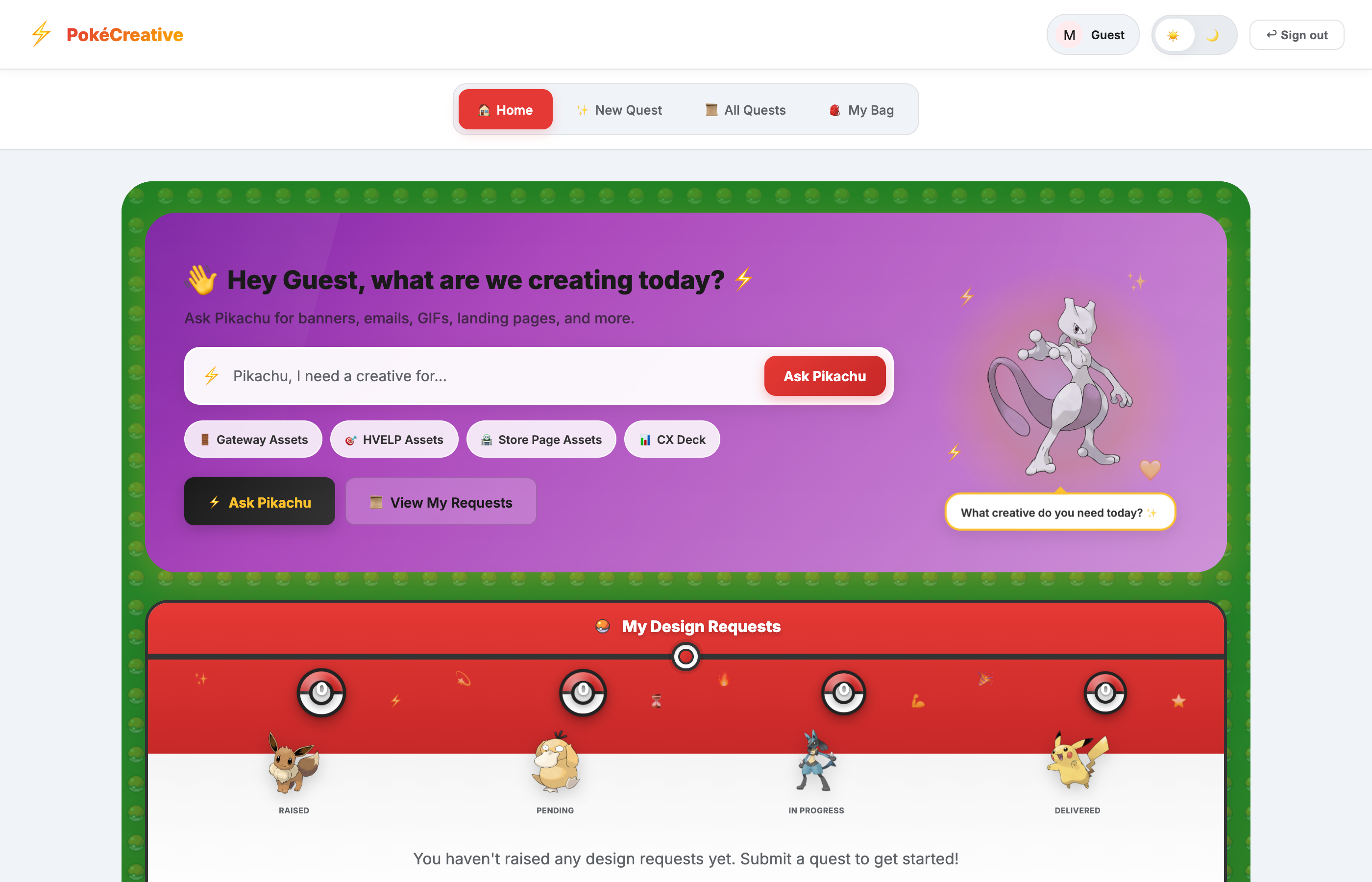
A gamified creative-request portal that turned a dull, spreadsheet-driven design workflow into a playful Pokémon-themed experience the whole Events team actually enjoys using.
This isn't a mockup. The window below is the actual live app running — log in with admin / admin and click around. Or open it full-screen in a new tab.
Creative requests came in from everywhere — Slack, email, hallway chats, random spreadsheets. Nothing was tracked, priorities were unclear, and things slipped through the cracks.
"Did you get my request?" "What's the status?" "Who's working on this?" — designers spent as much time chasing context as actually designing.
What if every request lived in one place, with clear status, owner, and priority — and the whole thing felt fun instead of like filing a ticket?
A single, delightful, gamified portal would get the team to actually adopt it — turning a chore into something people want to use.
The team had tried generic ticketing tools before — they felt corporate and boring, so nobody kept them updated. The data went stale within a week.
• Requests scattered across 4+ channels
• No single source of truth
• Unclear ownership & priority
• Zero visibility into status
• Tools felt like a chore
Adoption is the whole game. A perfectly logical tool that nobody enjoys using fails. Delight and personality drive people to actually keep it alive.
Pokémon: every teammate becomes a "trainer" with their own card, requests become "quests," and an assistant named Pikachu helps route them. Work, disguised as play.
From login to quest — every screen leans into the Pokémon theme. Pick a part to explore it.
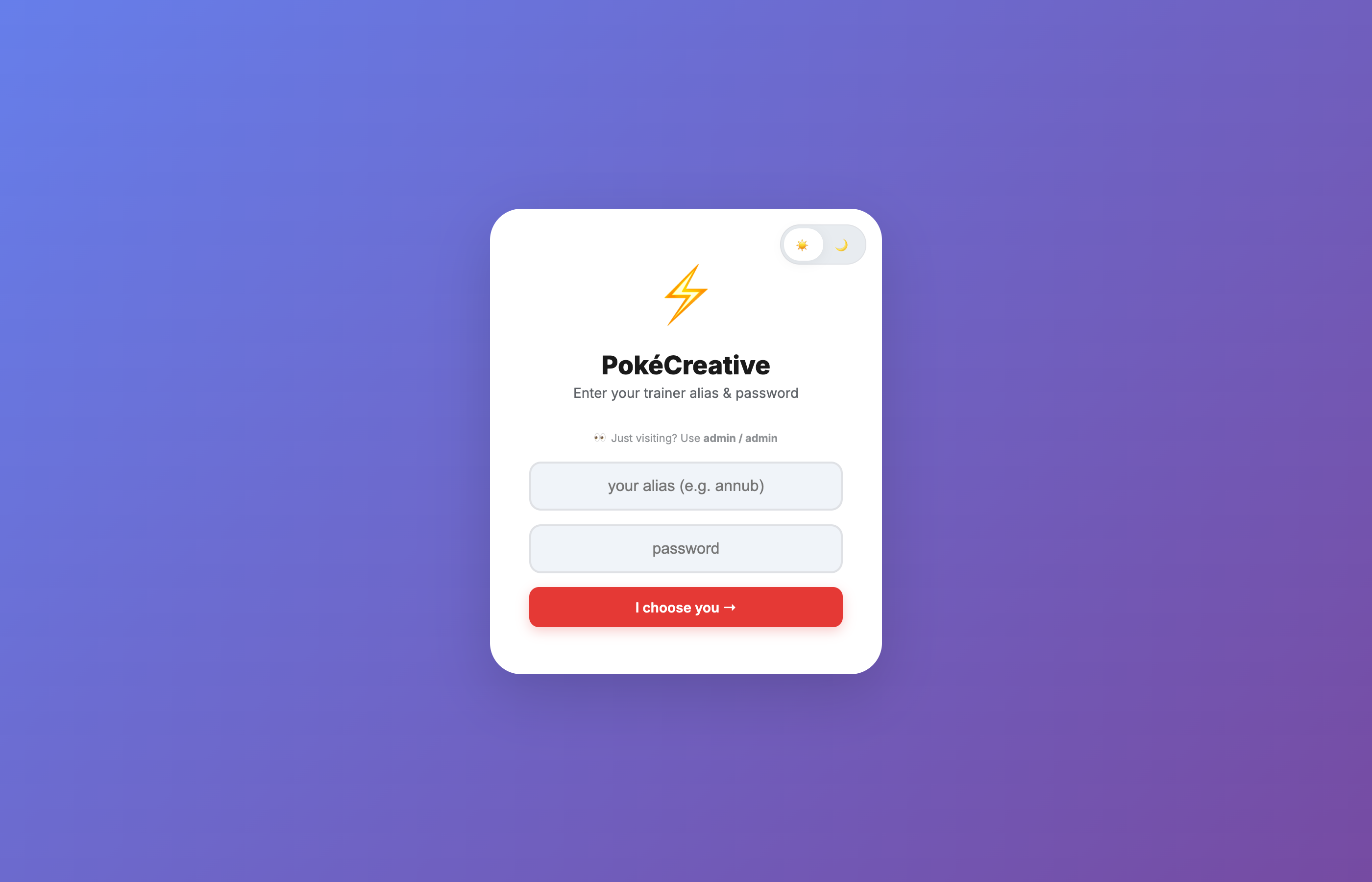
Sign in with your trainer alias — the theming starts at the front door. Guests can peek with a shared demo account.
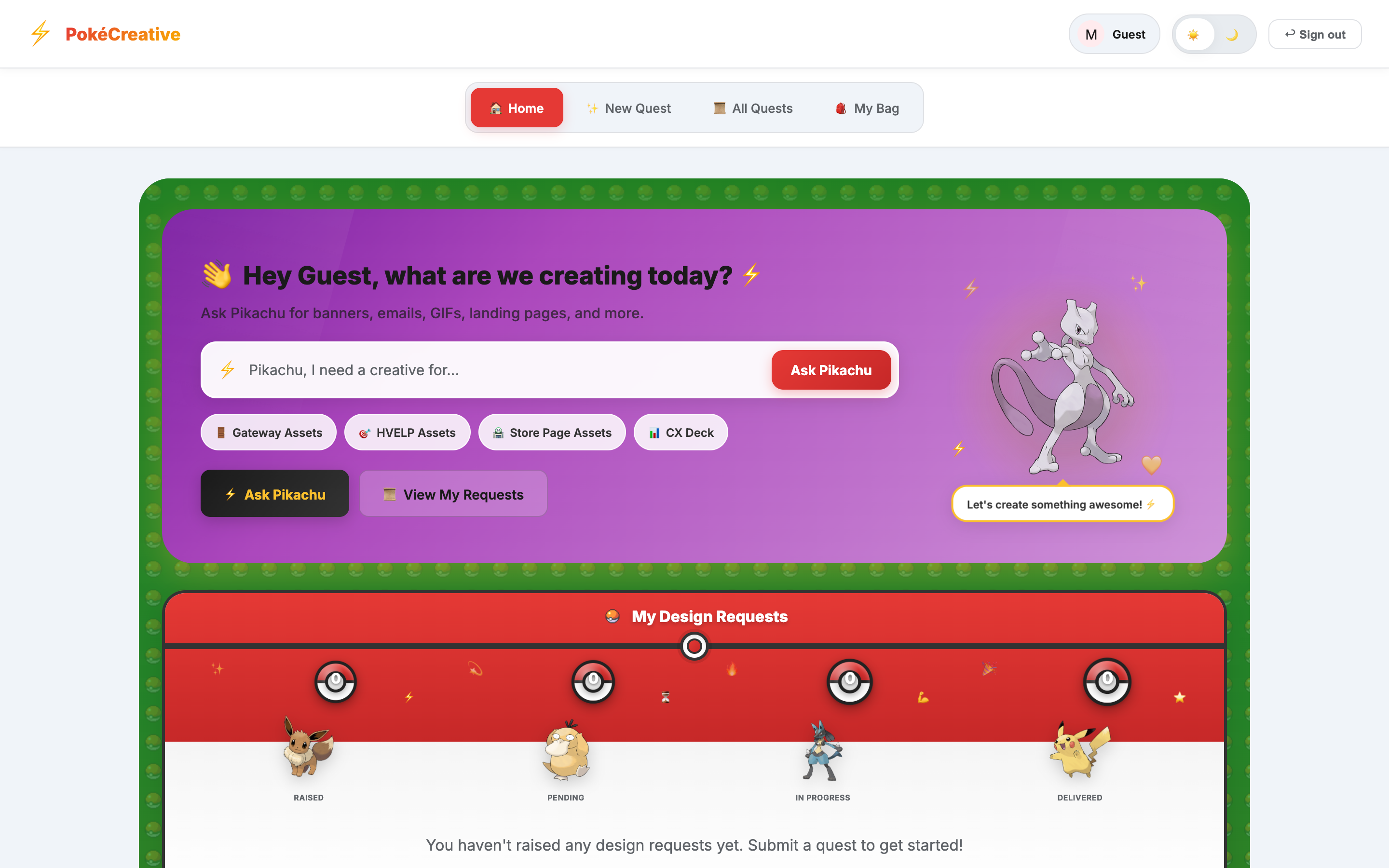
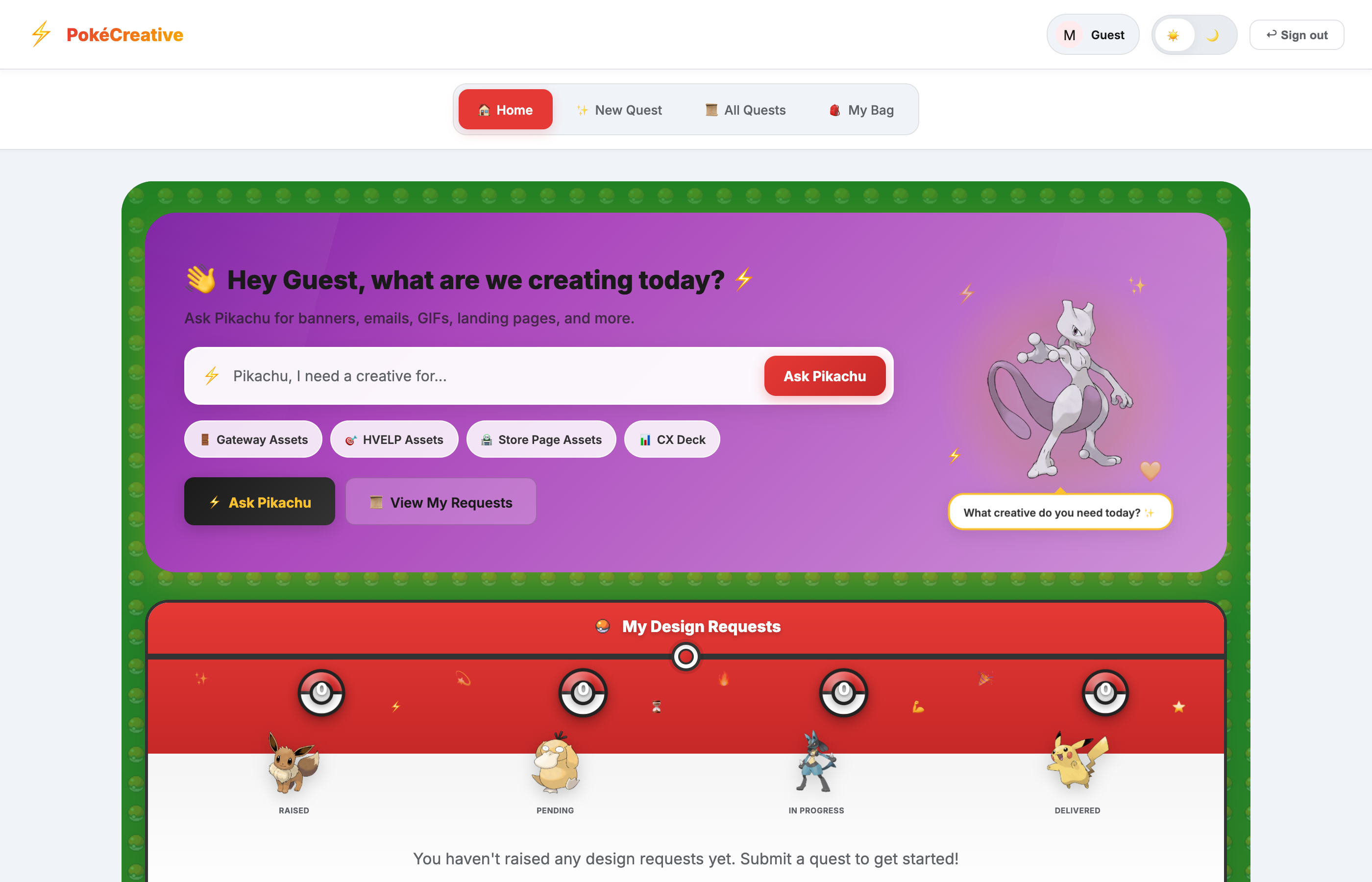
The landing hub — ask the assistant for a creative, jump to your requests, and see the whole team at once.
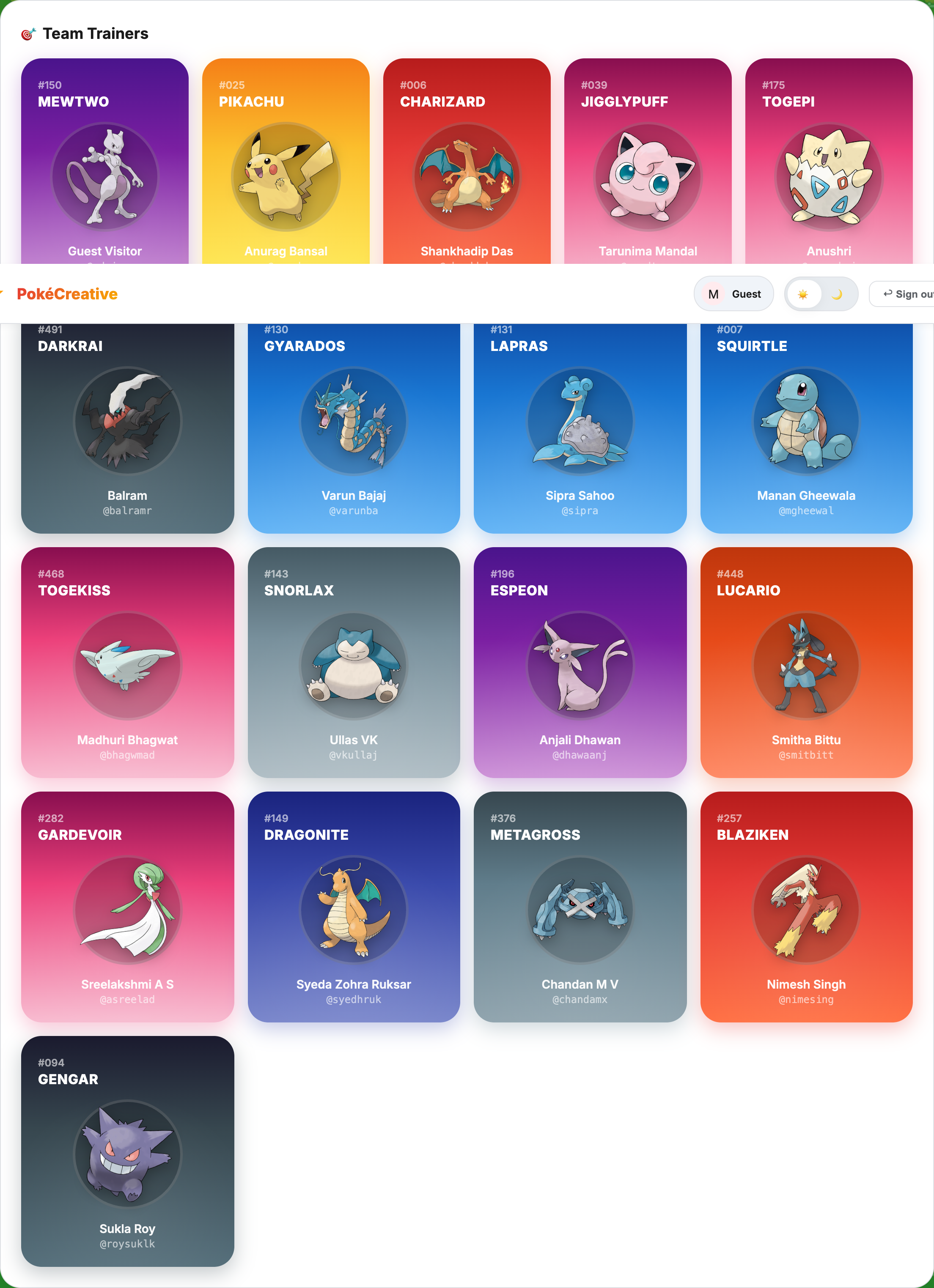
Each teammate gets their own collectible Pokémon card — name, alias, and a signature Pokémon. It's the detail that makes people smile and stick around.
Filing a creative request feels like starting a quest — title, dimensions, deadline, and priority, captured in a clean, friendly form.
Every request in one place, filterable by status and priority. No more "did you get my message?" — the whole team sees what's happening.
Pick a capability to explore it. One focused view at a time.
Every team member gets a personalized, collectible Pokémon card — the signature detail that makes the whole tool feel like it's theirs.
A friendly assistant bar to kick off a request in plain language, with quick chips for common asset types so nobody stares at a blank form.
Every request in one filterable board — status, priority, owner, and deadline visible at a glance. The single source of truth the team was missing.
Admins route quests to the right trainer, attach deliverables, and mark them delivered — closing the loop entirely inside the portal.
A full theme toggle for comfortable sessions, with the choice remembered across visits.
Trainers, quests, and a mascot turn an admin chore into something people genuinely enjoy — which is exactly what drives adoption.
Tap through each phase to see what happened.
Framed the core problem — nobody adopts boring request tools — and landed on the Pokémon "trainers & quests" metaphor. Sketched the flows and the card concept.
Built login, the quest creation form, and the filterable quest board with status and priority — the functional backbone of the portal.
Added the collectible team trainer cards, the "Ask Pikachu" assistant bar, admin deploy & assign, and the light/dark theming that gives it character.
Deployed the portal, onboarded the Events team as trainers, and started routing real creative requests through quests instead of scattered chats.
Tweaking flows and adding trainers as the team grows — keeping the tool fun enough that people actually keep it updated.
• Requests across Slack, email & docs
• No single source of truth
• Unclear ownership & priority
• Tools felt like a chore
• Data went stale fast
• Every request in one portal
• Clear status, owner & deadline
• A tool the team enjoys using
• Higher adoption = better data
• Personality that fits the team
The "logical" version of this tool already existed and nobody used it. Personality and fun were the actual feature that got the team on board.
The Pokémon theme had to enhance, not obstruct. Every playful touch still had to make the task faster, not slower.
Getting it in front of the team in two weeks surfaced what actually mattered far quicker than more planning would have.